
The first half of 2026 proved to be challenging as energy prices spiked following the war in Iran and subsequent de facto closure of the Strait of Hormuz. This had a particular impact on Asian markets, which are the most reliant on oil and gas supplies that pass through the Strait.
| MID-YEAR HIGHLIGHTS |
|
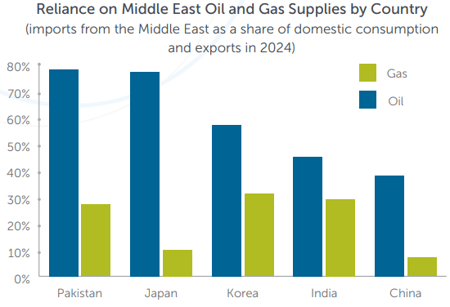
Source: RBC Wealth Management, March 16, 2026
However, a lot of the structural strengths we identified heading into the year remain in place.
Outlook
Eurozone Growth Revised to 0.9% Amid Global Tensions
Heading into the year, Europe was expected to see muted growth. In the first few months of 2026, short-term indicators suggested positive growth dynamics. However, the war in the Middle East resulted in downward revisions for the year, as the spike in energy prices led to more subdued consumption and investment. Baseline projections for GDP growth in 2026 have been revised down by 0.3 percentage points to 0.9% for 2026 and by 0.1 percentage points to 1.3% in 2027.1 Higher growth in the EU has also been weighed down by weak export activity due to a strong Euro and competitiveness challenges, including pressure from Chinese exports.2 We expect domestic demand to be the main driver of euro area growth, bolstered by a resilient labour market and government infrastructure spending.
Japan Leverages Record Spending and R&D for Growth
Should the war in Iran subside in the second half of the year,  we expect a recovery in the global economy, supporting a gradual increase in exports. Global Purchasing Managers’ Indexes (PMIs), which gauge the health of the manufacturing, services and construction sectors, are already trending positively. However, we also expect structural drivers to act as another engine for economic growth, specifically robust business investment in digitalization, labour-saving technologies and research and development.3
The budget that was passed in early April was also the largest in Japanese history, establishing the “Growth Strategy Council” to oversee massive R&D tax incentives and increase military spending by 10%. These are positive for the Japanese economy.
Despite projections that inflation will moderate back to the central bank target in 2027 4, we view a prolonged increase in oil prices as a threat that could further erode household purchasing power and stall the recovery in private spending.
China Offsets Housing Crisis with High-Tech Innovation
Key indicators  related to China’s multi-year property slump continue to slide, such as sales, prices, construction starts and completions. More than sixty developers have either defaulted on debt or entered restructuring negotiations.5 Although Beijing has rolled out measures, including lower mortgage rates and incentives for banks to support developers, we do not have high hopes for a strong rebound. However, several indicators point to a potential trough. In addition, the Chinese economy has shown pockets of resilience. China’s economy grew by 5% in the first quarter of the year, according to official government data.6 As we discuss in a recent publication, “How Technological Innovation is Reshaping China’s Growth Model”, the ailing property sector is having less of an impact on the Chinese economy as it pivots towards a “New Quality Productive Forces” framework that prioritizes high-efficiency, high-value growth sectors to replace labour-intensive manufacturing. We continue to monitor the country’s electric vehicle (EV) and AI industries, which have been direct beneficiaries of this framework.
 Download the full Empire Life 2026 Semi-Annual Market Outlook (PDF).
1 ECB staff macroeconomic projections for the euro area, March 2026
2 European Economic Outlook: Growth Gradually Accelerates Despite Tariff Headwinds , March 3, 2026
3 Daiichi Life Research Institute, “Japan Economic Outlook”, March 2026
4 OECD Economic Outlook, Interim Report, “Testing Resilience”, March 2026
5 Atlantic Council, “China’s property slump deepens-and threatens more than the housing sector”, January 28, 2026
6 The State Council of The People’s Republic of China, “Q1 data shows efficacy of China’s economic policies”, April 16, 2026
This document reflects the views of Empire Life as of the date published. The information in this document is for general information purposes only and is not to be construed as providing legal, tax, financial or professional advice. The Empire Life Insurance Company assumes no responsibility for any reliance on or misuse or omissions of the information contained in this document. Information contained in this report has been obtained from third party sources believed to be reliable, but accuracy cannot be guaranteed. Please seek professional advice before making any decisions.
Empire Life Investments Inc. is the Portfolio Manager of certain Empire Life segregated funds. Empire Life Investments Inc. is a wholly-owned subsidiary of The Empire Life Insurance Company.
Segregated fund contracts are issued by The Empire Life Insurance Company (“Empire Life”). A description of the key features of the individual variable insurance contract is contained in the Information Folder for the product being considered. Any amount that is allocated to a segregated fund is invested at the risk of the contract owner and may increase or decrease in value. Past performance is no guarantee of future performance.
® Registered Trademark of The Empire Life Insurance Company. All other trademarks are the property of their respective owners.
July 2026